


A little care goes a long way
Most sliding door repairs start with wear that builds up quietly. A few minutes of maintenance can help your door last longer between repairs.
Keep the track clean
Vacuum the bottom track with a narrow nozzle, then wipe it with a damp cloth and let it dry. In busy seasons or homes near the beach, doing this often makes a real difference.
Skip the heavy grease
Oils and greases attract sand. If the door needs help, a light application of dry silicone lubricant is usually a better choice.
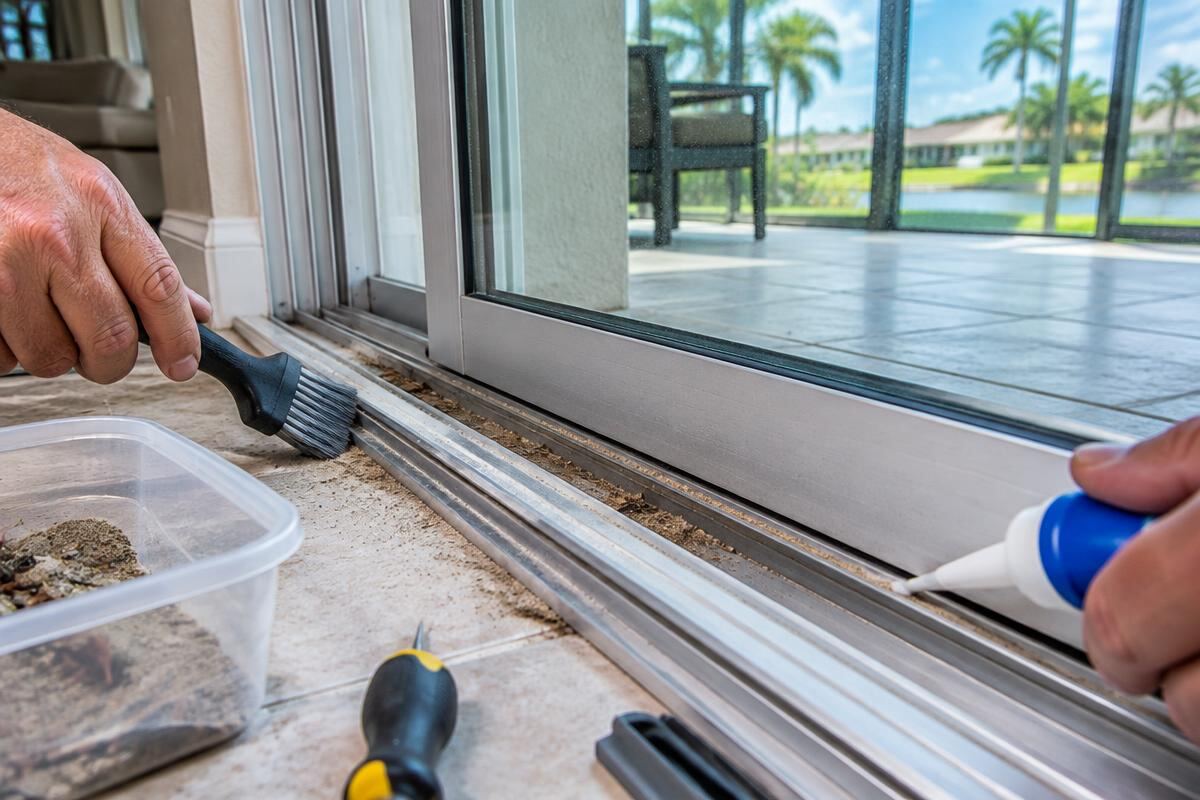
Check the seals
Look at the brush pile and rubber seals around the panel. If they're flattened, cracked or missing, they're no longer keeping out humid air and rain.
Keep weep holes clear
The small drainage holes in the sill let rainwater escape. Clear them gently so water doesn't back up during storms.
Don't force a stuck door
If the door suddenly becomes hard to move, stop and check the track. Forcing it can damage rollers, tracks and the frame.
Test the lock
Make sure the latch engages fully and the door can't be rattled open when locked. If it doesn't line up, the door may need adjustment.
Simple checklist
- Vacuum and wipe the track
- Inspect weatherstripping
- Clear weep holes
- Test the lock and handle
- Listen for grinding or scraping
Related services
- Residential Sliding Glass Door Repair
- Sliding Door Weatherstripping Replacement
- Sliding Door Track Repair
- Request a quote
Questions about this topic
How often should I clean my sliding door track?
Whenever you see sand or debris building up. Homes near the beach or pool may need it more often.
Can maintenance prevent all repairs?
No, parts eventually wear out, but regular cleaning and checks can help them last longer and catch issues early.