

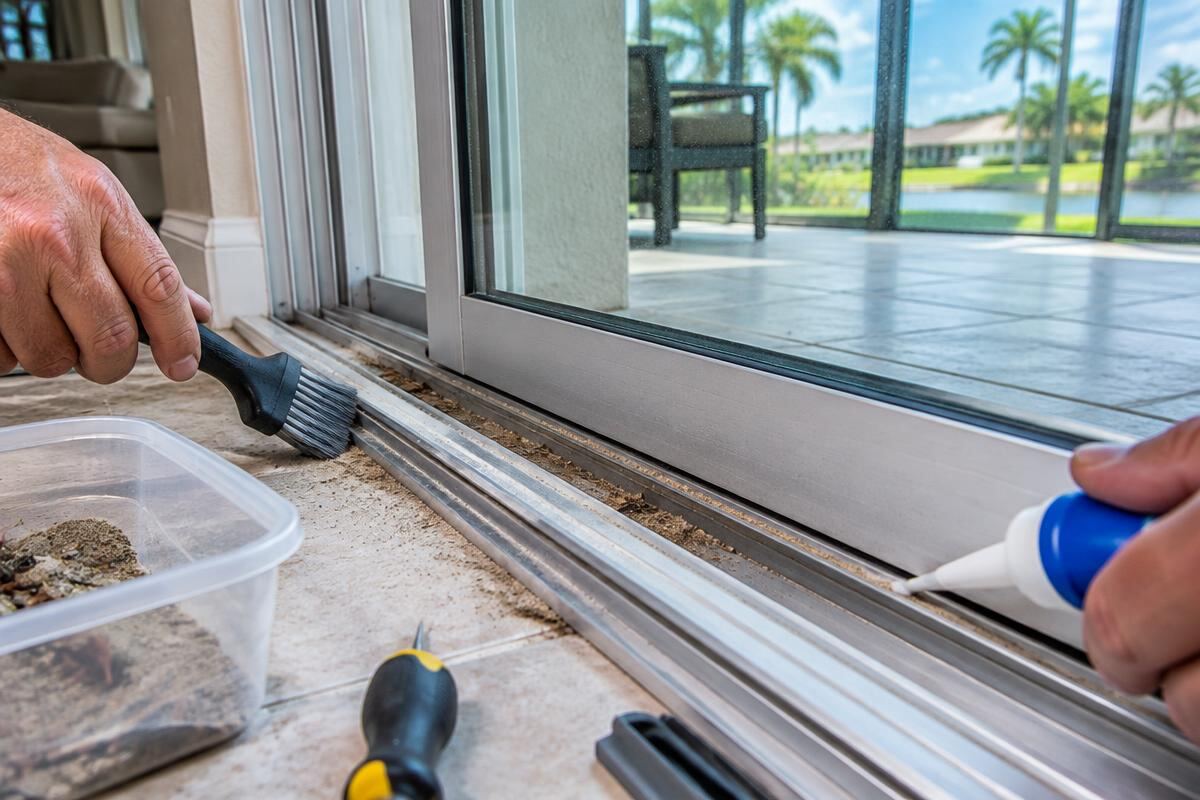
Start with a thorough cleaning
A track packed with sand can look and feel damaged. Vacuum it, wipe it and dry it, then run your finger along the rail. What's left is the track's true condition.
Damage that's usually repairable
Many track problems can be repaired:
- Small dents or bent sections
- Light wear grooves from rollers
- Surface roughness or minor pitting
- A worn rail that can accept a track cap
Damage that may need more
Some conditions go beyond a simple repair:
- Deep corrosion that has eaten through the metal
- A track that's part of a frame that is cracked or out of square
- Damage along most of the track's length

Don't forget the rollers
A damaged track wears out rollers, and bad rollers can damage a track. It makes sense to evaluate both together so a repair lasts.
Repair vs. replacement
For most doors, repairing the track — straightening, smoothing or capping it — restores smooth operation at a fraction of the cost of replacing the door. When the frame itself is failing, replacement becomes worth discussing.
Related services
Questions about this topic
What is a track cap?
A replacement running surface that fits over a worn track, giving rollers a smooth path again.
Can corrosion on a track be stopped?
Cleaning and keeping the track dry slows it down. Severe corrosion may require a repair or replacement rail.