

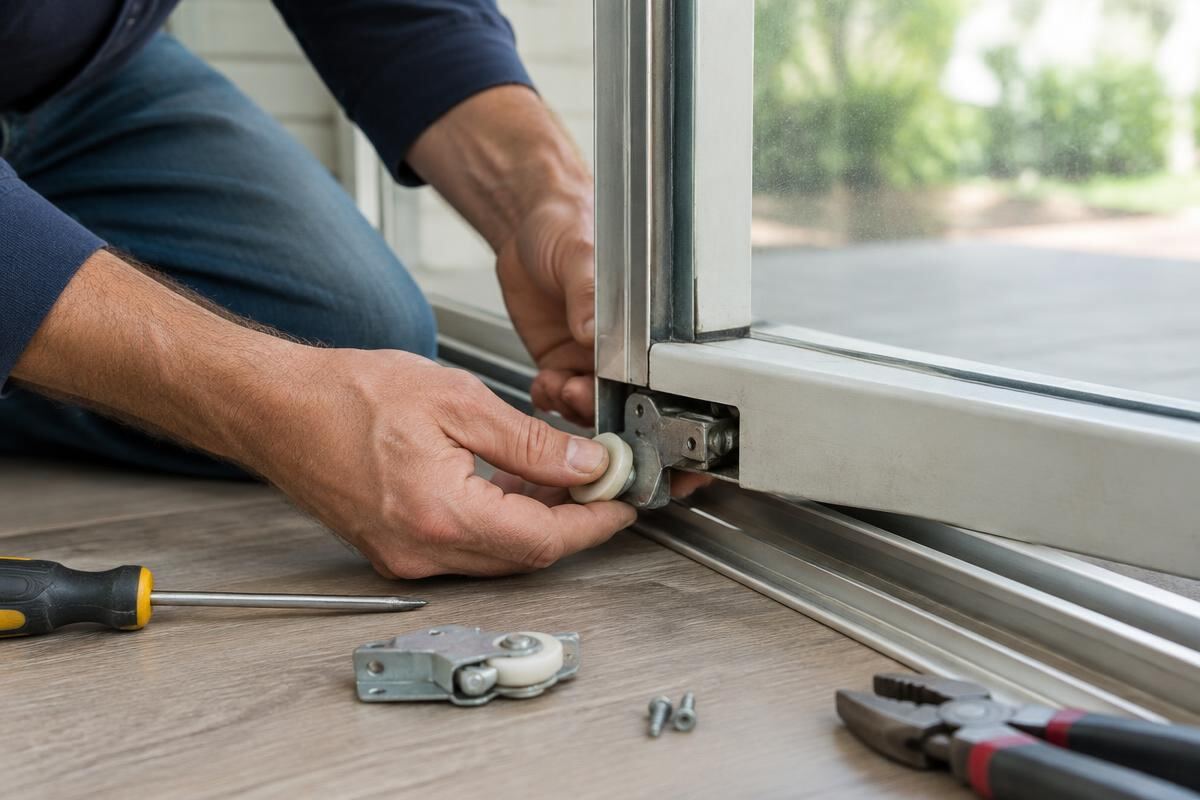
What rollers do
Each sliding glass panel rides on two or more roller assemblies set into its bottom rail. They carry the full weight of the glass and allow it to move with little effort. Because they're hidden, it's easy to forget about them until they fail.
Sign 1: The door is heavier than it used to be
If the door has become noticeably harder to move and cleaning the track hasn't helped, worn rollers are the most common reason.
Sign 2: Grinding or scraping noises
A healthy roller is quiet. Grinding, crunching or squealing suggests damaged bearings, cracked wheels or metal rubbing on metal.
Sign 3: The panel sits low or uneven
Look at the gap between the panel and the frame. If one side is lower, or the bottom of the door rubs the track, the rollers may have collapsed or slipped out of adjustment.
Sign 4: The lock no longer lines up
When rollers wear, the panel drops and the latch no longer meets the keeper. Many lock problems are actually roller problems.
Sign 5: Jerky movement
A door that moves in fits and starts, or wants to jump off the track, often has a wheel that's flat-spotted or seized.
Replace, don't just adjust
Adjustment can help rollers that are in good shape but set too low. Worn-out rollers need replacing; adjusting them only buys a little time. Because the track affects roller life, it should be checked at the same time.
Related services
- Sliding Door Roller Replacement
- Sliding Door Track Repair
- Sliding Door Lock and Handle Repair
- Request a quote
Questions about this topic
How long do sliding door rollers last?
It varies with door weight, use, and how much sand and moisture they're exposed to. Doors near pools and beaches often wear rollers sooner.
Should all rollers be replaced at once?
Usually it's best to replace the rollers on a panel as a set so the door sits level and wears evenly.
Can I keep using the door with bad rollers?
It's best not to force it. Dragging a door on failed rollers can damage the track and frame.