

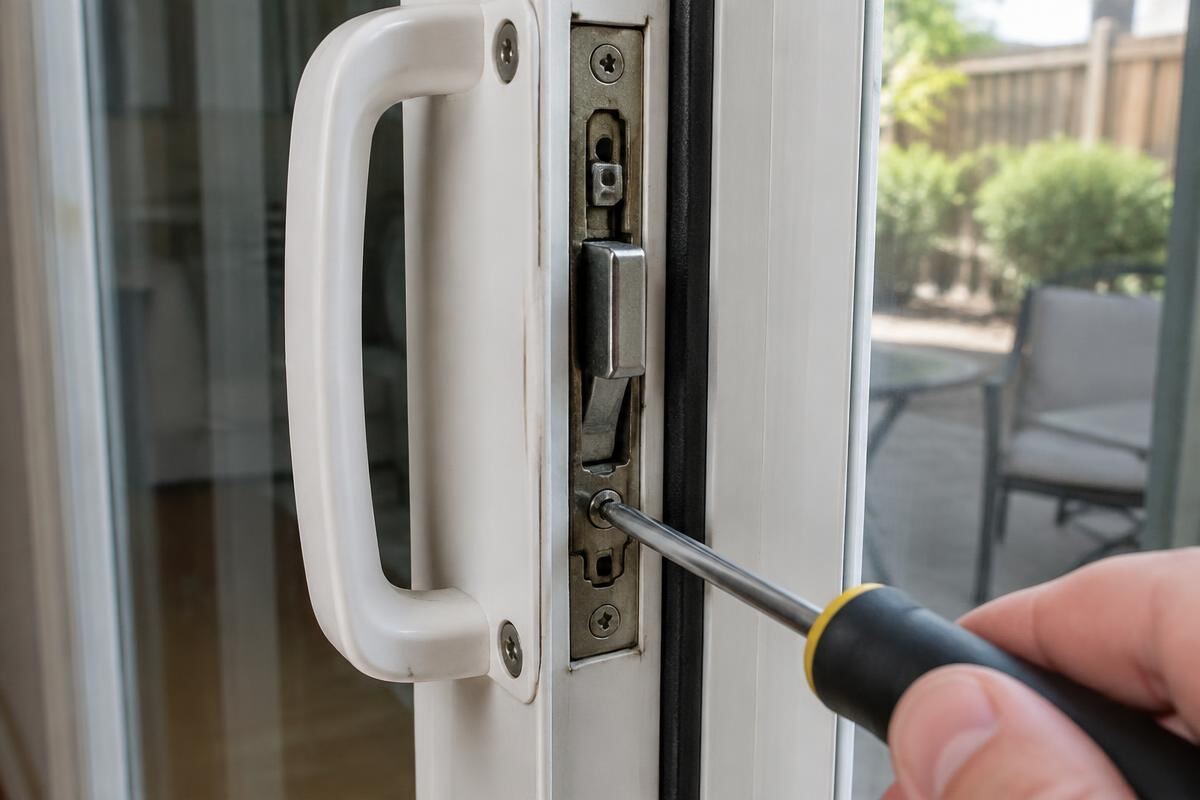
How a sliding door lock works
Most sliding glass doors use a hook or latch inside the edge of the panel. When you move the lever, the hook swings out and grabs a keeper (strike) on the frame. For that to work, the hook, the keeper and the door's position all need to line up.
Problem 1: The latch won't catch
This is the most common complaint, and it's often not the lock at all. When rollers wear, the panel drops and the hook misses the keeper. Raising the panel back into position frequently solves it.
Problem 2: The lever spins or feels loose
A lever that turns without moving the hook usually means a broken or disconnected part inside the lock body. The lock mechanism typically needs repair or replacement.
Problem 3: A stiff or sticking lock
Humidity and salt air can corrode internal parts. Sometimes cleaning helps; otherwise the mechanism is replaced.
Problem 4: Broken or wobbly handles
Handles take a lot of force every day. Loose screws can be tightened, but cracked handles need replacement with a compatible set.
Problem 5: The door locks but still rattles
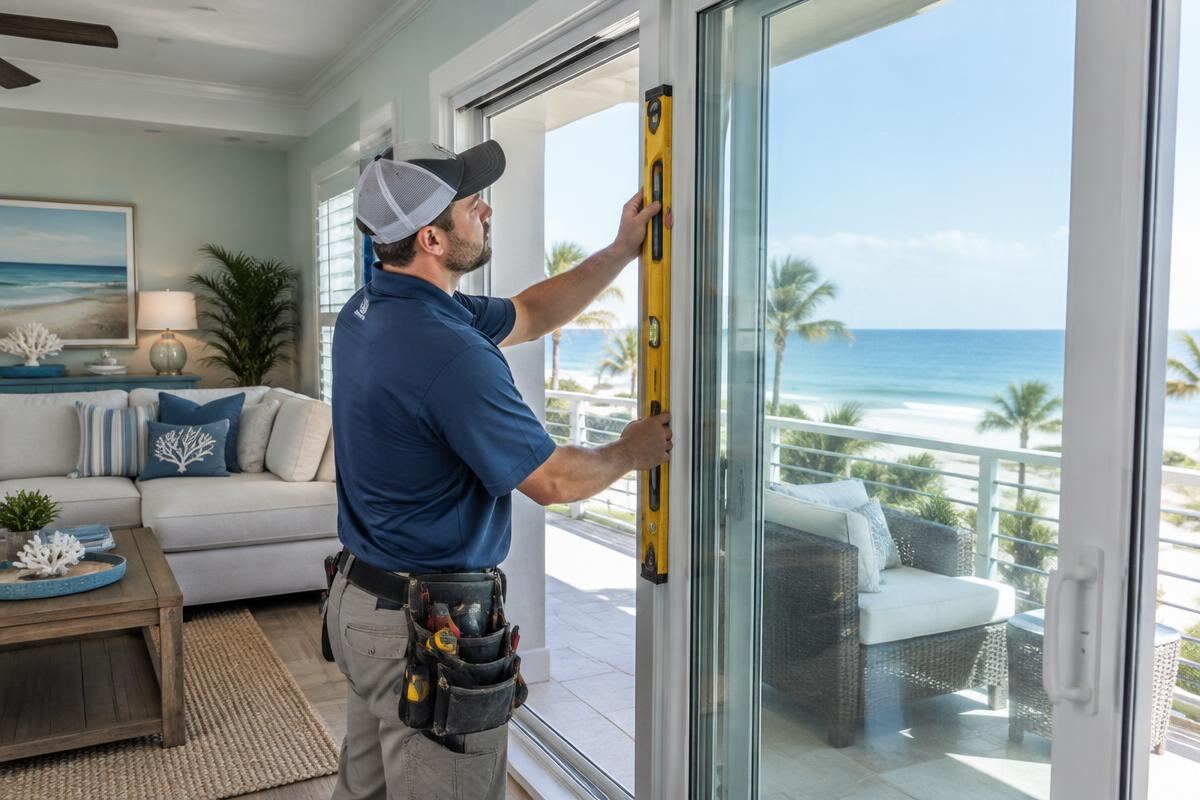
If a locked door can be rattled or pulled, the keeper may be worn or the panel may be out of alignment. Both should be checked to make sure the door is properly secured.
Related services
- Sliding Door Lock and Handle Repair
- Sliding Door Alignment and Adjustment
- Sliding Door Roller Replacement
- Request a quote
Questions about this topic
Can I just replace the keeper?
If the keeper is worn or bent, replacing it can help — but check the door's alignment first.
Are replacement locks available for older doors?
Original parts may be discontinued, but compatible replacement locks are often available.
Is a sliding door that won't lock a security concern?
Yes. A door that doesn't latch securely should be repaired promptly.